
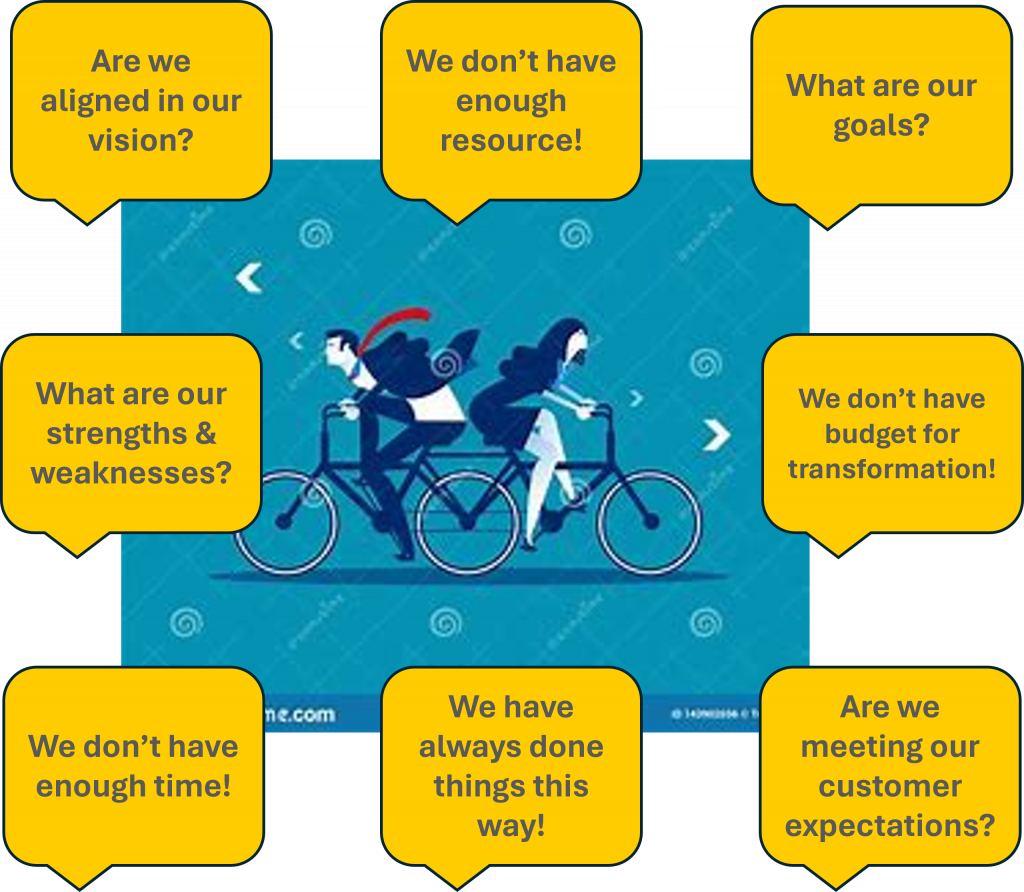
Transformation projects involve making significant changes within an organisation to improve its overall performance, adapt to new market conditions, and achieve strategic goals. Here are key points to consider:
Purpose and Scope:
- Business transformation aims to enhance efficiency, competitiveness, and innovation.
- It encompasses various aspects, including technology, processes, culture, and organisational structure.
Transformation Projects: How to Go From Idea to Execution
- Stages of Business Transformation:
- Planning:
- Define your motivation and rationale for the transformation.
- Establish an endpoint or goal.
- Identify the necessary skills and people to lead the project.
- Execution:
- Implement changes based on the plan.
- Communicate effectively with stakeholders.
- Involve employees and teams throughout the process.
- Continuous Improvement:
- Monitor progress and adjust as needed.
- Learn from successes and failures.
- Adapt to changing circumstances.
- Planning:
- Critical Factors for Transformation Programs:
- Urgency: Transformation programs are driven by a sense of urgency.
- Scope and Impact: They are broad in scope and significantly impact the organization.
- Parallel Operations: Transformation occurs alongside ongoing operations.
- Examples of our Successful Transformation Projects:
- Financial Services sector transformational process change.
- Large scale changes in accounting close procedures.
- Process improvement and resource optimisation in engineering sectors.
- Changes within an organisation can occur at different levels:
- Developmental Change: Frequent, minor improvements (process enhancements, skill updates, etc.).
- Transitional Change: Rare, significant shifts (mergers, reorganizations, new product launches).
- Transformation: The most challenging type of change. The organisation enters an unknown state, potentially altering culture, products, revenue models, and more.
Remember, transformation projects require careful planning, effective communication, and adaptability.